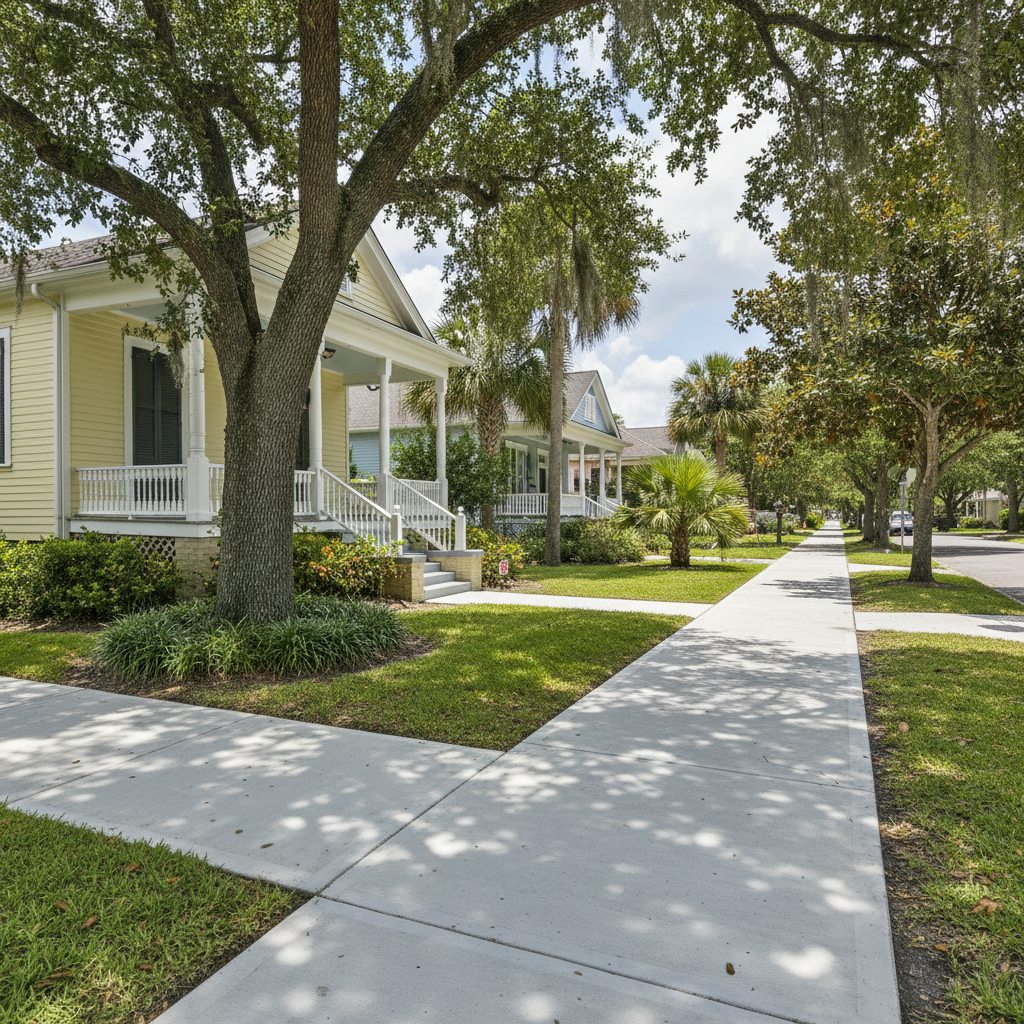
You might walk down a street in New Orleans and wonder how some of these sidewalks got so messed up. You might also have a section in front of your own place that is looking rough. You might be thinking about fixing it. Working with Concrete Sidewalks in New Orleans is not like pouring a slab in, for example, Arizona. We have our own set of challenges here. If you do not know these challenges, then you will have a bad time.
The Ground Beneath Our Feet: A NOLA Specialty
First, we will talk about the dirt. We mean the mud. New Orleans sits on very soft, water-saturated soil. This soil is mostly clay and organic stuff. The Mississippi River dumped this soil here over thousands of years. This ground is not stable. It expands when it is wet. It shrinks when it is dry. It is constantly shifting. That movement puts a lot of stress on anything built on top of it. This includes your Concrete Sidewalks in New Orleans.
You will see this problem all over town. You might notice how some Concrete Sidewalks in the Garden District or Uptown are wavy. They look like a gentle roller coaster. That is often the soil doing its thing underneath. Heavy rains, which we get many of, can erode the base material. This creates voids. These voids lead to sinking or collapse. In addition, the humidity is a constant factor. It makes concrete porous. It is also susceptible to moisture absorption. This just adds to the expansion and contraction cycle for Concrete Sidewalks.
Common Sidewalk Headaches Around Here
So, these are the kinds of problems all of this leads to. You have seen them:
- Sinking and Settling: This is probably the most common issue for Concrete Sidewalks in New Orleans. The soft, shifting soil cannot always hold up the concrete. This is especially true over time. This creates uneven surfaces. These surfaces are not just ugly. They are serious tripping hazards.
- Cracks, Cracks, Everywhere: Cracks are a constant battle. This goes from hairline fractures to wide-open chasms. The soil movement contributes to cracks. Temperature swings contribute to cracks. Moisture also contributes to cracks. All of these things make concrete expand and contract. This eventually leads to cracks in your Concrete Sidewalks.
- Tree Root Intrusion: Our beautiful live oaks and magnolias are iconic. Their roots are notorious for lifting and cracking Concrete Sidewalk panels. You see this problem a lot in older neighborhoods. This is where those big trees have been around for generations.
- Spalling and Surface Damage: The intense sun can cause the top layer of Concrete Sidewalks to flake or peel away. Humidity also causes this. Occasional freeze-thaw cycles also cause this.
- Ponding Water: If your Concrete Sidewalk is not draining right, water can pool. This softens the ground underneath. This also speeds up deterioration.
Why You Need Someone Who Knows NOLA Concrete
This is not just about mixing cement and pouring it. This is about knowing how to deal with New Orleans. Here is why local expertise matters for Concrete Sidewalks:
Understanding the Soil and Weather
A good local Concrete Contractor in New Orleans knows about the expansive clay soils. They know how these soils behave. They know how to prepare the subgrade properly. This means compacting it. Sometimes it means adding materials like gravel or crushed limestone. This creates a more stable base for Concrete Sidewalks. They also know to factor in our heavy rainfall. They factor in humidity as well. They use the right concrete mix. They also make sure of proper curing. This prevents early failure of Concrete Sidewalks.
Navigating City Regulations and Permits
You cannot just tear up a Concrete Sidewalk in front of your house in New Orleans. The City of New Orleans has rules. You will need a Sidewalk Repair Permit for any work in the public right-of-way. This includes the Concrete Sidewalk in front of your property. Property owners are responsible for maintaining Concrete Sidewalks in a safe condition. Depending on where you are, there might be additional approvals needed. This is true if you are in the French Quarter. This is also true if you are in the Downtown Development District. There are even specific requirements for things like ADA compliance. There are also requirements for maximum slopes. Detectable warning surfaces for handicap ramps are also required. A Concrete Contractor like Omega Concrete Solutions knows these ins and outs. This means you do not end up with fines or stop-work orders.
Preserving Local Character
You can walk around some of our historic neighborhoods. You will see all sorts of unique Concrete Sidewalk treatments. There is a lot of history underfoot. This goes from the old brick sidewalks in areas like the French Quarter. It also goes to the iconic street tiles that used to be embedded in concrete. A local Concrete Contractor appreciates this. They can help make sure your repair or replacement respects the character of your neighborhood. This means matching existing materials. It also means understanding specific aesthetic guidelines.
Preventing Future Problems
It is not just about fixing what is broken. It is about making sure it stays fixed. That means proper drainage solutions. It also means correct joint placement. This allows for expansion and contraction. In addition, it means using high-quality materials. These materials must be suited for our climate. Skipping these steps is just asking for the same problems to pop up again. This is especially true in a place like New Orleans. This will happen a few years down the road.
So, if you have Concrete Sidewalk issues, do not just call the first guy you see. Find someone who understands what it means to pour concrete in the Big Easy. It will save you a lot of grief. It will also save you a lot of money in the long run.