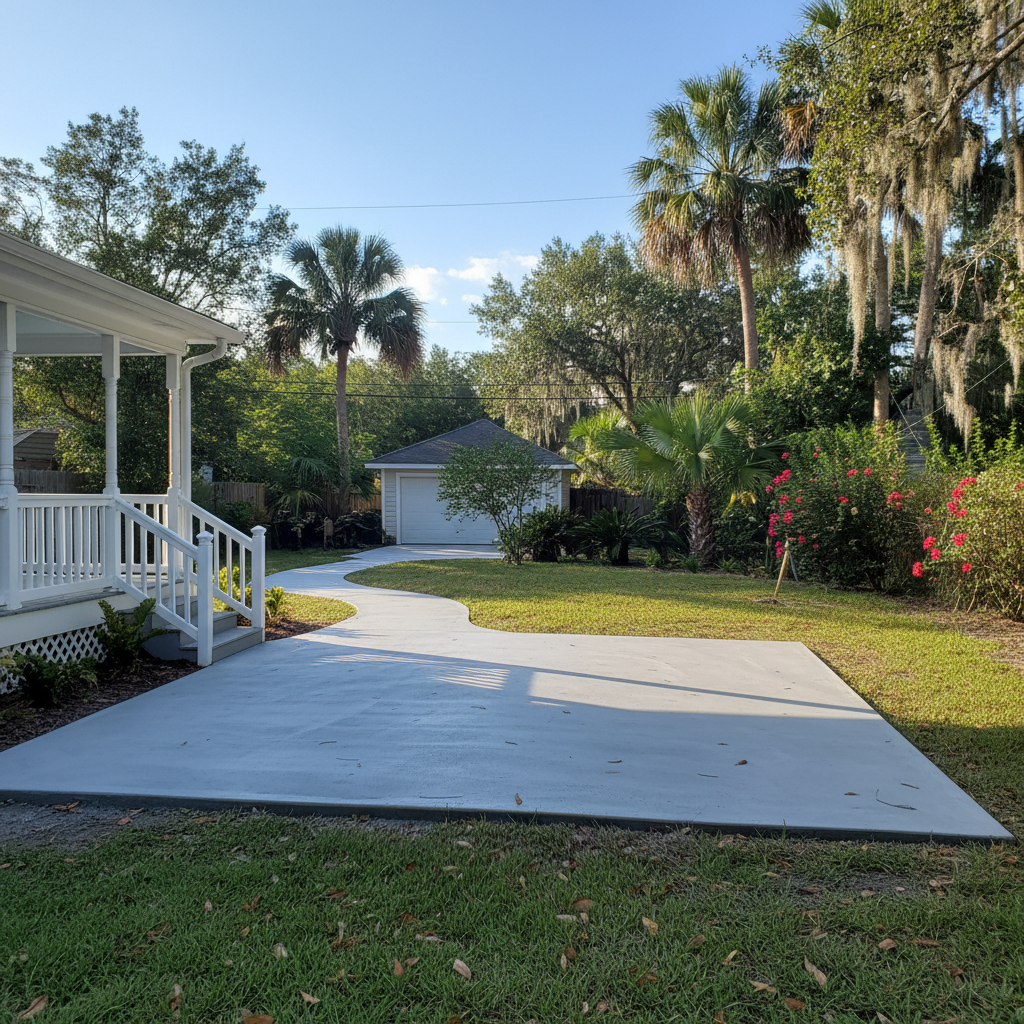
Let us talk about Concrete Flatwork here in New Orleans. You might think concrete is just concrete. Our team knows that down here, with our crazy weather and unique soil, it is a whole different ballgame. If you are a homeowner looking to put in a new driveway, a new patio, or a new walkway, or just trying to keep your existing Concrete Flatwork in shape, you need to understand how our local climate plays a huge role. Omega Concrete Solutions has seen it all. Ignoring Mother Nature around here is a recipe for disaster with your Concrete Flatwork project.
When to Schedule Your Concrete Flatwork Project in New Orleans
So, when is the best time to pour Concrete Flatwork? It is not as simple as picking a free weekend. The ideal temperature for pouring and curing Concrete Flatwork is usually between 50 and 60 degrees Fahrenheit. That is where it gains strength properly without drying too fast or too slow. In New Orleans, that sweet spot usually means spring or fall for your Concrete Flatwork.
- Spring (March - May): This is often a great window for Concrete Flatwork. Temperatures are mild. The ground is thawing out from any cooler snaps, which makes site preparation easier. You get enough time for the Concrete Flatwork to cure before that brutal summer heat kicks in. The only catch is that spring can be unpredictable with rain. Wet ground can complicate things for your Concrete Flatwork project. Our team is always watching the forecasts like a hawk for Concrete Flatwork in New Orleans.
- Fall (October - November): For a lot of us pros, fall is prime time for Concrete Flatwork. The weather is usually cool but not cold. Humidity tends to drop a bit. You are less likely to get those scorching temperatures messing with the cure for your Concrete Flatwork. It is a stable environment for strong, even results. In addition, you can get your Concrete Flatwork project done before the real winter chill sets in.
- Winter (December - February): You can pour Concrete Flatwork in winter, especially with our mild Louisiana winters. Sometimes you will hit those 50-60 degree days. If it dips below 50 degrees, you need extra precautions. These precautions include insulating as well as heating to keep the Concrete Flatwork warm enough to cure right. If water in fresh concrete freezes, it expands. This expansion can cause cracks in your Concrete Flatwork.
- Summer (June - September): This is usually the toughest time for Concrete Flatwork. It is hot. It is humid. We get those pop-up afternoon thunderstorms. High heat makes Concrete Flatwork set super fast. This can lead to shrinkage cracks as well as a weaker finish. Humidity slows surface drying a bit. It can also extend the overall curing time. If you have to pour Concrete Flatwork in summer, our team times it for early morning to avoid the peak heat as well as rapid drying.
Weather Conditions That Affect Concrete Flatwork in New Orleans
Our subtropical climate here in New Orleans presents some real challenges for Concrete Flatwork. It is not just about temperature for your Concrete Flatwork.
- Humidity: New Orleans is famous for its humidity. It is often 70-90%. Humidity can prevent the Concrete Flatwork from drying out too quickly. It also slows down surface hardening. This can make the overall curing process take longer for your Concrete Flatwork.
- Rain: Sudden downpours are a fact of life, especially in spring and summer. Freshly poured Concrete Flatwork can get washed out or weakened by rain. Rain can also mess up the surface texture. That is why our team is always checking hourly forecasts and has tarps ready for your Concrete Flatwork project.
- Soft, Saturated Soil: This is a big one for Concrete Flatwork, especially in neighborhoods like Gentilly or the Lower Ninth Ward. Our soil is naturally soft. It is often clay-heavy. It retains a lot of water. This can lead to issues like shifting, sinking, and uneven settlement if the base is not prepped right for your Concrete Flatwork. Omega Concrete Solutions often recommends a good crushed stone base as well as thorough compaction to stabilize things.
- Temperature Fluctuations: Even if it is not freezing, the constant shift between hot days and cooler nights causes Concrete Flatwork to expand and contract. This stress can lead to cracks over time in your Concrete Flatwork.
Protecting Your Concrete Flatwork Investment Year-Round in New Orleans
Once your Concrete Flatwork is in, you have to protect it. It is not a set-it-and-forget-it deal, especially here in New Orleans.
Seal Your Concrete Flatwork
This is probably the most important thing you can do for your Concrete Flatwork. Concrete is porous. This means it absorbs water from our humid air as well as frequent rain. An unsealed slab can stain, crack, and erode way faster than it should. We usually recommend waiting at least 28 days for the Concrete Flatwork to cure before applying a sealer. Sometimes it is longer if it is super humid. A good penetrating sealer, like a silane or siloxane, will soak into the Concrete Flatwork. It will resist moisture without making it slippery. It is like giving your Concrete Flatwork a raincoat.
Mind Those Expansion Joints for Your Concrete Flatwork
You see those lines cut into your driveway or patio. Those are not just for looks. They are expansion joints. They give the Concrete Flatwork room to expand and contract with temperature changes. This prevents random cracks. If those joints are empty or the filler is worn out, they are open invitations for water to get underneath your slab. Water can wash away the soil. This leads to sinking and instability for your Concrete Flatwork. Inspect them annually for cracks or missing filler. If you see issues, clean out the debris and replace that joint filler. It is a small task that saves big headaches for your Concrete Flatwork.
Drainage, Drainage, Drainage for Concrete Flatwork
This cannot be stressed enough in New Orleans for Concrete Flatwork. With our heavy rainfall and high water table, you need to make sure water flows away from your Concrete Flatwork. Check your gutters as well as your downspouts. Make sure the ground around your Concrete Flatwork slopes away from it. Pooling water is the enemy. It can erode the soil beneath, causing settlement as well as cracks. If you have a soggy backyard, that is a problem for any Concrete Flatwork you put down.
Clean Your Concrete Flatwork Regularly
Our humid climate means mold and mildew love to grow on Concrete Flatwork. Regular cleaning with a pressure washer and appropriate cleaners will keep your Concrete Flatwork looking good. It will also prevent biological growth from breaking down the surface over time. Just be careful with the pressure. Too high can damage the Concrete Flatwork itself.
Maintaining Concrete Flatwork in New Orleans is not always easy. With a little know-how and some seasonal attention, you can keep your flatwork strong and looking sharp for years. If you have questions or need a hand with any of this, Omega Concrete Solutions is always here to help you navigate our unique local conditions for your Concrete Flatwork.