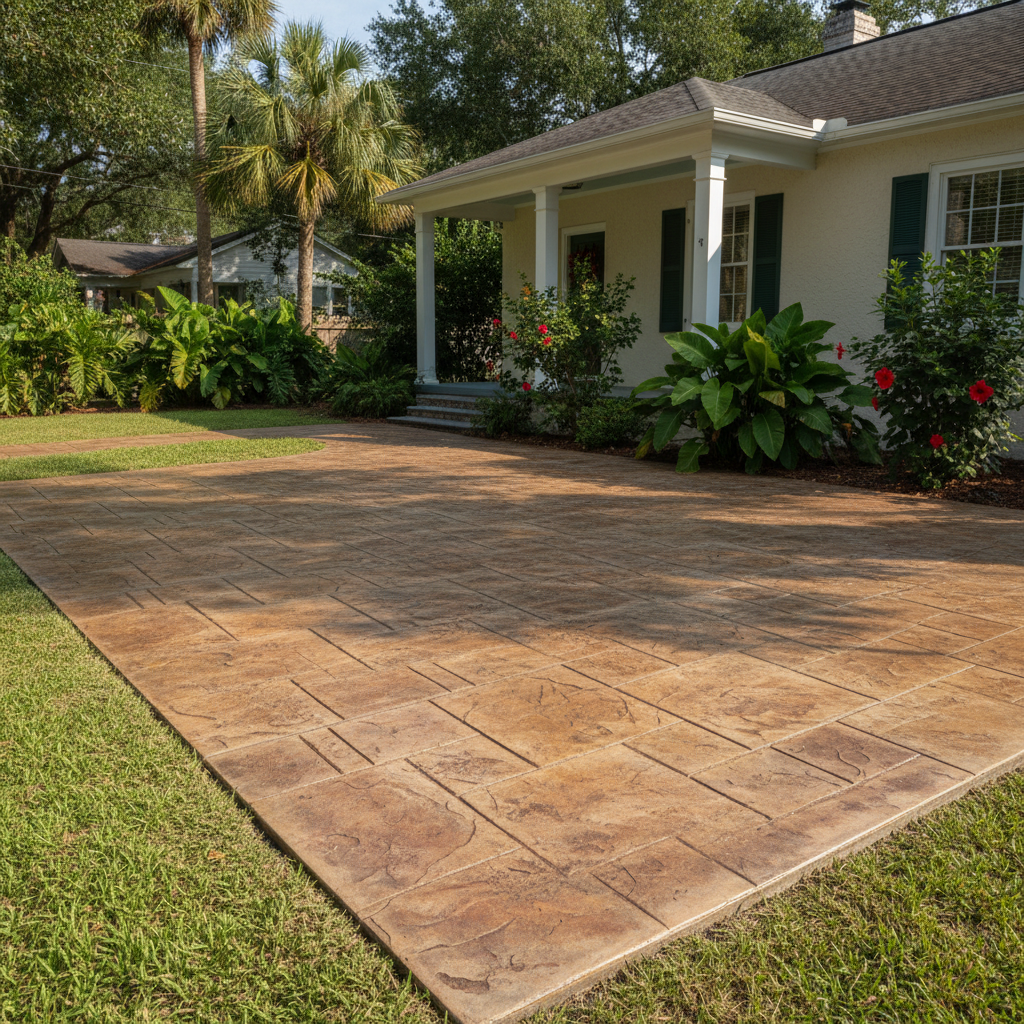
Thinking about stamped concrete, huh? Good call. It's a fantastic way to get that high-end look without all the fuss of pavers or natural stone. But before you get too excited about a new slate patio or a driveway that looks like wood planks, you probably want to know what it'll actually cost you here in New Orleans. Fair enough! Nobody likes sticker shock, especially when it comes to home projects.
What Makes the Price Go Up or Down?
A lot of folks think concrete is concrete, plain and simple. But when you start adding stamping and color, things get a bit more involved. Here’s what I consider when I’m putting together a quote:
- The Size and Shape of the Area: This one's pretty obvious, right? Bigger spaces need more material and more hours from the crew. But don't forget about complex shapes – lots of curves or tight corners definitely take more time and skill than, say, a basic rectangle.
- Existing Surface Prep: Are we pouring on fresh, untouched ground? Or do we have to tear out an old, cracked slab first? Demolition and hauling away all that debris adds to the cost, usually somewhere around $2-$5 per square foot. That price depends on how thick and stubborn the old concrete is. And if we're dealing with soft, marshy soil, which is super common in places like Gentilly, we might need extra base material and some serious compaction. That's more prep work, you know?
- The Pattern and Texture: Some patterns are just easier to lay down than others. A simple brick or cobblestone design might be less labor-intensive compared to a really detailed natural stone or wood grain. More intricate patterns mean we spend more time aligning stamps and making sure all those little details look just right.
- Color Choices and Application: A single integral color – that's when the color is mixed right into the concrete – is usually the most budget-friendly option. But if you're dreaming of multiple colors, or want antiquing agents, or even hand-applied stains for a truly nuanced, realistic finish, well, that's going to bump up both material and labor costs.
- Sealing and Finish: Every single stamped concrete job absolutely needs a good sealer. It protects the surface from our famously humid climate, UV rays, and just general wear and tear. Some sealers are tougher and pricier than others, and how we apply them can vary quite a bit.
- Accessibility: Can our trucks and equipment easily get right up to where we're working? Or do we have to pump concrete over a fence or squeeze it through a narrow gate? Tricky access means more time and specialized gear, no two ways about it.
Typical Costs You'll See Here in NOLA
Alright, let's talk real numbers. For a basic, single-color stamped concrete job with a common pattern (think brick or a simple stone look), you're generally looking at a range of $12 to $18 per square foot. This usually covers the concrete itself, the integral color, one stamp pattern, basic sealing, and the labor, assuming the site is already prepped.
Now, if you're after something a bit more custom – maybe a two-tone finish, an intricate pattern like a European fan or detailed wood plank, or some hand-applied antiquing – that price can jump to $18 to $25 per square foot. For those really high-end, multi-color, custom-designed jobs with premium sealers and complex installations, you could even see prices climb north of $25 per square foot. Just remember, these are averages; every single job is unique, right?
What Should Be in Your Quote?
When Omega Concrete Solutions gives you a quote, or any reputable contractor for that matter, it should be super clear. Here’s what you should expect to see detailed:
- Square Footage: The exact area we'll be covering.
- Concrete PSI and Thickness: We typically pour 4-inch thick, 3500 PSI concrete for residential driveways and patios, but your quote will spell it out.
- Reinforcement: Whether it's wire mesh or rebar, and how we're using it.
- Base Preparation: What we're doing to the ground underneath (like compaction or adding a gravel base).
- Stamped Pattern Selection: The specific pattern you've chosen.
- Color(s) and Application Method: Integral, surface release, antiquing, whatever it is.
- Sealer Type and Number of Coats: This is super important for how long it lasts.
- Expansion Joints: Exactly where they'll be placed to keep cracks from getting out of hand.
- Demolition and Haul Away: If applicable, this should be its own line item.
- Cleanup: What's included in the final site cleanup.
Don't Overpay: A Few Pointers
You want a good job, and you certainly don't want to get ripped off. Here’s how to make sure you're getting fair value:
- Get Multiple Bids: I know it sounds basic, but seriously, get at least three detailed quotes. Don't just pick the cheapest one; really compare what each contractor is offering for that price.
- Ask for References and See Their Work: Any good contractor should be proud to show off their past projects. Try to look at jobs they did a few years ago to see how they've held up over time.
- Understand the Details: Don't be shy! Ask questions about anything in the quote you don't understand. What kind of sealer are they using? How thick is the concrete? What's their warranty look like?
- Beware of Lowball Offers: If one quote is drastically lower than all the others, there's usually a reason. They might be cutting corners on materials, or labor, or maybe they just don't really grasp the full scope of work involved in a quality stamped concrete job. You definitely don't want to pay twice to fix a bad job, do you?
- Check for Licensing and Insurance: This is non-negotiable, period. Make absolutely sure they're licensed and insured. You don't want to be held liable if someone gets hurt on your property.
Stamped concrete is a fantastic investment that really adds curb appeal and value to your home. Just do your homework, ask the right questions, and you'll end up with a beautiful, durable surface that you'll enjoy for years and years.