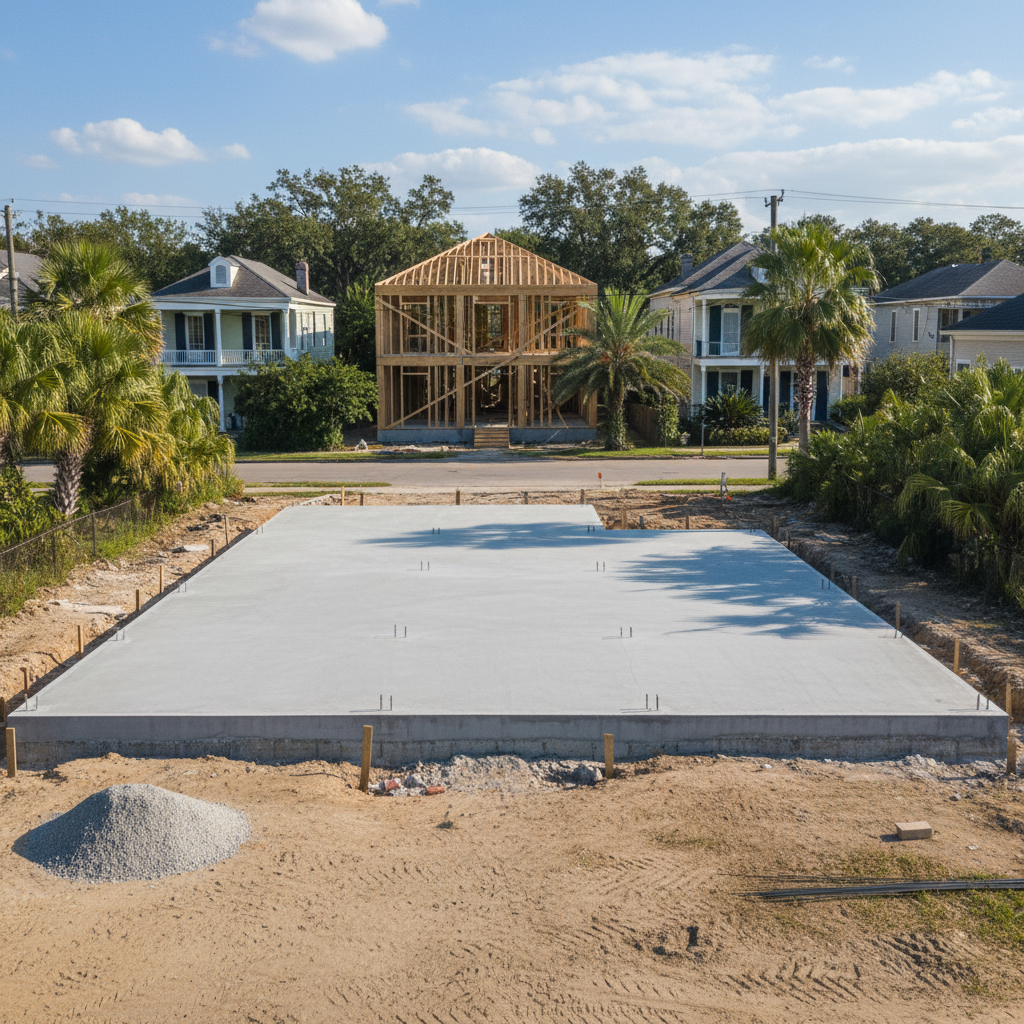
Doors in some Uptown historic doubles stop latching right after a heavy summer downpour because of the ground beneath us. Building and maintaining concrete foundations in New Orleans is different compared to almost anywhere else in the country. We are not building on solid rock down here. We are building on a shifting delta made of alluvial silt, soft clays, and a water table that is sitting right below your lawn.
When you are pouring a new slab or shoring up an existing foundation in neighborhoods like Lakeview or Gentilly, you deal with realities that out-of-town contractors usually underestimate. The soil compresses, it holds moisture like a giant sponge, and during dry spells, it shrinks unevenly. If a crew treats our soil like standard clay up in North Louisiana or Mississippi, you are going to see cracks and differential settlement. Omega Concrete Solutions has spent years figuring out how to work with these conditions instead of fighting a losing battle against them.
The High Stakes of Sub-Base Prep
You can use the highest-grade concrete mix available, but it will not save a project if the sub-base is not right. Down here near the Gulf, moisture control is important. We have to account for intense hydrostatic pressure pushing up against slabs and crawl space walls whenever the rain starts coming down.
- Excavating carefully to match local engineering specs
- Laying down heavy-duty vapor barriers to block relentless humidity
- Compacting the sub-grade using laser-guided precision
- Installing proper drainage channels to keep water moving away from the structure
Skipping even one of these steps is a gamble. When water gets trapped under a foundation slab, it creates voids as it moves, leading to sinking and cracking concrete that can ruin your flooring and compromise your framing.
Why Generic Solutions Fall Short
National franchise outfits love to roll into town with cookie-cutter formulas. They want to apply the exact same repair or pour technique in New Orleans that they use in dry climates out west. But that approach fails here. You have to understand how local weather patterns interact with our specific neighborhood elevations—whether you are sitting low near Bayou St. John or up on the natural levee ridge.
Getting it right takes experience, patience, and a deep respect for the environment we live in. Taking shortcuts on a foundation pour will always cost you triple down the road when structural issues start showing up in your walls and windows.
If you are planning a new build, a home addition, or noticing worrisome cracks in your slab, make sure whoever you bring out knows the local terrain inside and out. Omega Concrete Solutions provides concrete services for homes in New Orleans, Louisiana.